


CARF ACCREDITATION:
Results, Strengths, + Quality Improvement
FROM THE CEO:
“Transparency remains paramount in all that we do.”
To our community,
At LifeWays, our commitment to quality, accountability, and continuous improvement is at the core of everything we do. As part of that commitment, we recently completed our accreditation survey with CARF International—an independent accrediting body that evaluates service quality against rigorous national standards.
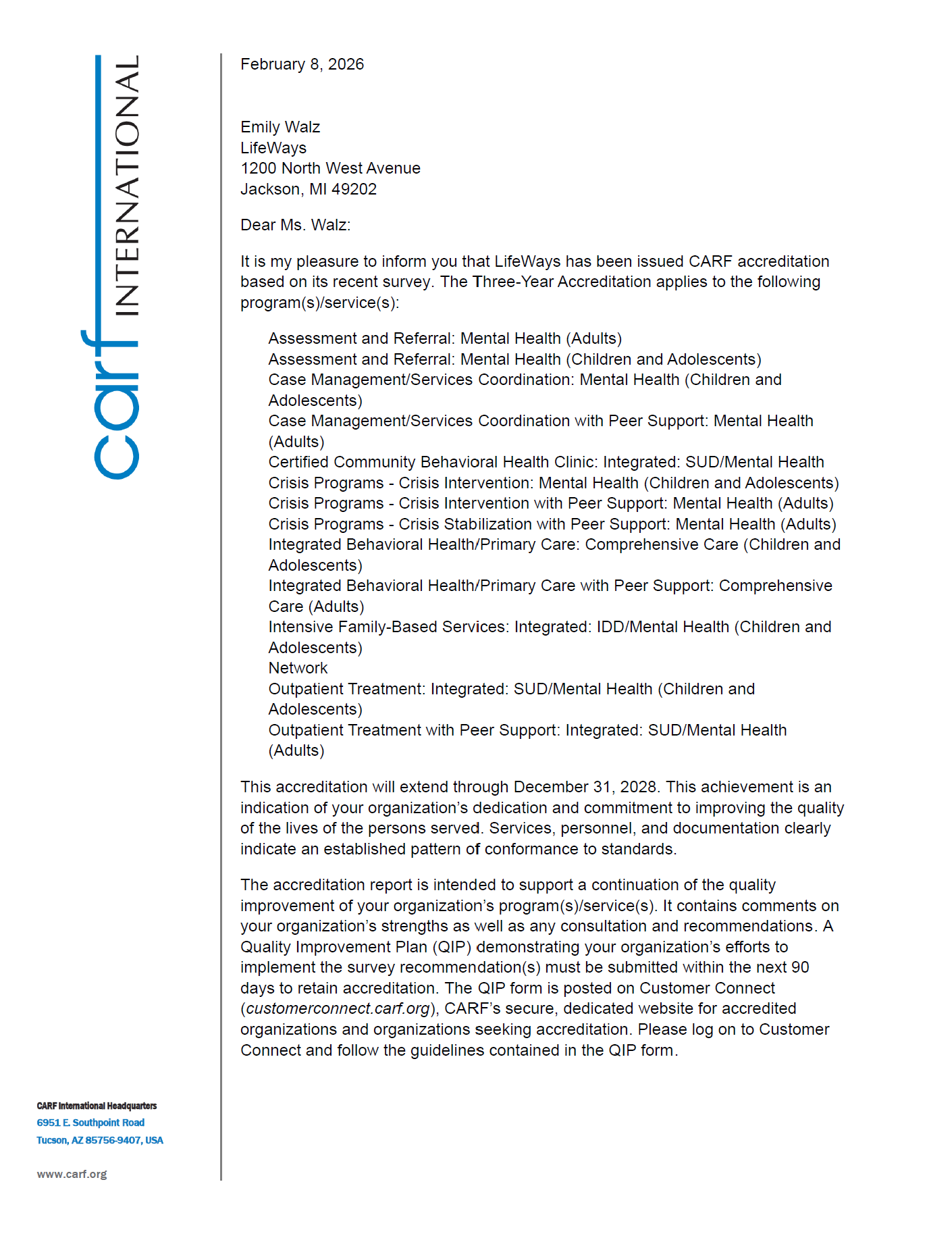
I am proud to share that LifeWays has been awarded a Three-Year CARF Accreditation, the highest level of accreditation possible. Even more notably, out of 2,448 standards reviewed, LifeWays received only three recommendations for improvement—an exceptional outcome that reflects the strength of our organization and the dedication of our team.
The survey findings highlighted what we strive for every day: a culture grounded in respect, collaboration, and person-centered care. Individuals we serve shared powerful feedback about their experiences, describing LifeWays as “a breath of fresh air” and emphasizing the meaningful connections they have with our staff. Reviewers also recognized our strong community partnerships, high-quality clinical practices, and the welcoming, safe environments we have created across our services.
This achievement belongs to our entire organization, from our frontline staff to our leadership team, and to the many community partners who collaborate with us to support individuals and families. It is also a reflection of the voices of those we serve, whose feedback continues to shape and strengthen our work.
While we celebrate this accomplishment, we remain focused on continuous improvement. As part of the accreditation process, we will complete a Quality Improvement Plan to address the few recommendations identified, further strengthening areas such as community engagement and care coordination.
Transparency remains paramount in all that we do. We are proud to share these results openly, along with our continued efforts to grow, improve, and deliver the highest quality services to our community.
Thank you for your continued trust in LifeWays.
Cassandra Watson
CEO, LifeWays
ASSESSMENT RESULTS
LifeWays recently completed a comprehensive accreditation survey conducted by CARF International, an independent accrediting body that evaluates organizations against rigorous, internationally recognized standards for quality and service delivery.
Accreditation Outcome: Three-Year Accreditation (Highest Level)
Standards Reviewed: 2,448
Recommendations Issued: 3
This outcome represents an exceptional level of performance, demonstrating that LifeWays meets or exceeds nearly all CARF standards across a wide range of programs and services.
LifeWays demonstrated substantial conformance to CARF standards, reflecting a strong foundation of high-quality, person-centered services, effective oversight, and a deeply embedded culture of continuous improvement.
This achievement affirms that LifeWays is delivering services that are well-coordinated, responsive to community needs, and focused on recovery, wellness, and long-term outcomes.
-
LifeWays’ Three-Year CARF Accreditation represents the highest level of accreditation awarded and signifies that the organization meets or exceeds rigorous international standards for quality, safety, and service delivery.
Receiving only three recommendations out of 2,448 standards is an exceptional result and reflects:
Strong leadership and organizational oversight
High-quality, person-centered care
Effective community partnerships
A culture of continuous improvement and accountability
This outcome affirms that LifeWays is delivering services that are well-coordinated, responsive to community needs, and focused on recovery and wellness.
-
As part of maintaining CARF accreditation, LifeWays will:
Develop and submit a Quality Improvement Plan (QIP) addressing the identified recommendations
Continue annual reporting to CARF
Maintain compliance with all CARF standards and accreditation requirements
Use feedback from individuals served, staff, and community partners to drive continued improvement
-
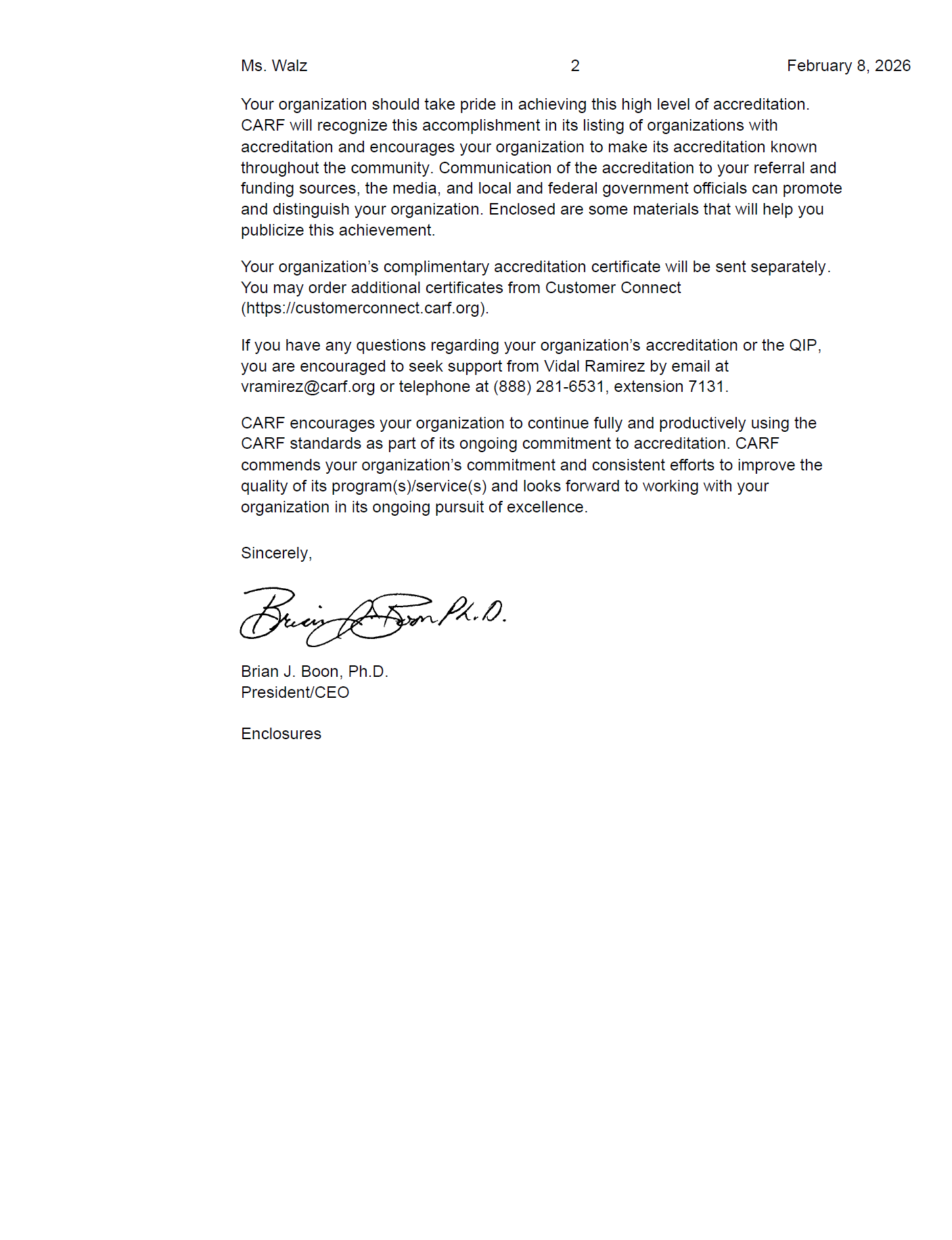
The survey addressed by this report is specific to the following programs/services:
Assessment and Referral: Mental Health (Adults)
Assessment and Referral: Mental Health (Children and Adolescents)
Case Management/Services Coordination with Peer Support: Mental Health (Adults)
Case Management/Services Coordination: Mental Health (Children and Adolescents)
Certified Community Behavioral Health Clinic: Integrated: SUD/Mental Health
Crisis Programs – Crisis Intervention with Peer Support: Mental Health (Adults)
Crisis Programs – Crisis Intervention: Mental Health (Children and Adolescents)
Crisis Programs – Crisis Stabilization with Peer Support: Mental Health (Adults)
Integrated Behavioral Health/Primary Care with Peer Support: Comprehensive Care (Adults)
Integrated Behavioral Health/Primary Care: Comprehensive Care (Children and Adolescents)
Intensive Family-Based Services: Integrated: IDD/Mental Health (Children and Adolescents)
Network
Outpatient Treatment with Peer Support: Integrated: SUD/Mental Health (Adults)
Outpatient Treatment: Integrated: SUD/Mental Health (Children and Adolescents)
CONSUMER FEEDBACK
Here is a small sample of the many strengths referenced by CARF to celebrate:
“LifeWays is a breath of fresh air.”
“I don’t know what I want to do in life, but I know I want to be with LifeWays.”
“Front desk staff make me feel so special—they greet me by name.”
“LifeWays is a breath of fresh air.” “I don’t know what I want to do in life, but I know I want to be with LifeWays.” “Front desk staff make me feel so special—they greet me by name.”
CARF-IDENTIFIED STRENGTHS
Strengths Identified by CARF
CARF identified numerous strengths that highlight LifeWays’ commitment to quality, collaboration, and person-centered care:
-
There are extensive mechanisms for feedback from various stakeholders. There are opportunities for persons served to participate in forums and committees to provide feedback. There are also numerous surveys and outcome measures for which data are collected. Persons served participate in the community advisory board. It was apparent that there is demonstrable feedback provided that is appreciated by the staff and administration.
-
LifeWays has a very team-spirited philosophy in its administration of the organization. The entire administrative staff, including leadership, is friendly and appears committed to providing the highest quality of care possible to the persons served.
-
External stakeholders offered high praise for the organization. It was expressed that the organization has been, over the years, a consistently high-quality treatment provider. External stakeholders were appreciative of the fact that the organization has been responsive to the needs of their populations of focus. The organization is also recognized for responding very timely to any inquiries.
-
The Board of Directors is very active and constructively engaged in the oversight of the organization’s operations and is quite proud of its accomplishments. Board members were very enthusiastic and complimentary of the work done by the organization. Several board member subcommittees have evolved to facilitate constructive oversight and support the organization.
-
The organization is complimented on its use of the plans and analyses of various activities. The integration of these efforts into an annual performance analysis is comprehensive. Plans are well articulated and detailed.
-
LifeWays started an initiative to improve communication between local first responders and persons served with special needs before emergencies occur.
-
The work environment utilizes the concept of “positive intent” to demonstrate the value of the staff members. This positively influences and improves the overall work culture.
-
LifeWays has an emergency code warning contingent system. Codes identifying the emergency are sent to all staff members via phone notifications and/or emails so that staff members can respond safely and accordingly.
-
The crisis services have developed a strong relationship with local law enforcement, including the new SAFE program, ride-along opportunities, and ongoing Crisis Intervention Team (CIT) training. This partnership ensures the safety of the persons served and the community and reflects the intentional way that LifeWays cultivates valuable partnerships within the community.
-
LifeWays demonstrates a clear commitment to integrating veterans into its workforce and service delivery. Targeted efforts and partnerships have resulted in staff members who are veterans and bring valuable lived experience and cultural insight. Their presence enhances engagement, rapport, and service responsiveness for veterans and community members. This integration reflects the organization’s dedication to providing culturally informed, trauma-responsive care that aligns with the needs of the populations it serves.
-
LifeWays has demonstrated excellence in managing the network via effective use of the primary organization’s well-written policies and procedures. There is an efficient method to choose organizations as network providers. There is a system of oversight that includes consistent communication via response to immediate identified areas to be performed by the cadre of contracted providers. External stakeholders identified the organization’s consistent interactions that focus on problem or concern resolution as a strength.
-
The staff displays a dedication to meeting the expectations and requirements of the network. The communication among staff members is excellent with other departmental staff members and contracted providers. They are clearly dedicated professionals.
-
Staff members across all roles consistently demonstrated mutual respect when referring to the community, the persons and families served, and to one another. Team members articulated a shared commitment to supporting the successes of persons served and their families; recognizing the strengths of organizational leadership; and providing holistic, person-centered wellness services. The organization prioritizes equitable, accessible, and inclusive care across all service delivery systems.
-
Persons served reported high levels of satisfaction with the services available across the organization’s continuum of care. One individual noted that after working with more than four previous providers, being connected with a therapist at LifeWays felt like “a breath of fresh air.”
-
Staff members consistently described organizational leadership as accessible, supportive, and actively engaged in promoting high-quality service delivery. Employees reported that supervisory practices emphasize clear communication, professional accountability, and ongoing development of staff competencies. It was evident that leadership fosters a culture of collaboration, transparency, and continuous improvement aligned with the organization’s mission and strategic goals.
-
The organization’s physical locations seamlessly blend being welcoming and cheerful while prioritizing safety for staff members and the persons served. Clear attention has been paid to considering all locations within the building and how to balance the need for safety features while keeping engagement of the persons served at the center. Both program facilities are clean and well maintained. The facilities are spacious and appropriate for the services provided.
OPPORTUNITIES FOR QUALITY IMPROVEMENT
In this section of the report, a recommendation identifies any standard for which CARF determined that the organization did not meet the minimum requirements to demonstrate full conformance. All recommendations must be addressed in a QIP submitted to CARF.
-
Section 6. Certified Community Behavioral Health Clinic Program Standards
6.A. Staffing
6.A.1.a.(8)(b)
6.A.1.a.(8)(c)
6.A.1.a.(8)(f)
Recommendations: While the organization does have a robust needs assessment completed, the assessment did not include input from several entities in the service area. It is recommended a community needs assessment address input from health centers, including Federally Qualified health Centers (FQHCs) in the service area; local health departments; and representatives from local K-12 school systems. -
Section 6. Certified Community Behavioral Health Clinic Program Standards
6.C. Care Coordination
6.C.17.a.(3)
Recommendations: It is recommended that the CCBHC have written agreements that establish care coordination expectations with programs that can provide residential SUD treatment programs.
6.C.19.h.(12)
6.C.19.h.(13)
Recommendations: It is recommended that the CCBHC have established relationships with community or regional services, supports, and providers that (based on the populations served, the needs and preferences of persons and/or needs identified in the community needs assessment) include legal aid and immigrant and refugee services. -
Section 6. Certified Community Behavioral Health Clinic Program Standards
6.E. Quality and Other Reporting
6.E.5.b.
6.E.5.c.
6.E.5.d.
Reccomendations: While the CCBHC has a robust continious quality improvement (CQI) plan, the plan did not include some elements. It is recommended that the CCBHC's CQI plan also address fatal and non-fatal overdose, all-cause mortality among people receiving CCBHC services, and 30-day hospital readmissions for pyschiatric or substance use reasons.

LifeWays has been awarded the highest level of accreditation by CARF International.

LifeWays is also held to the highest level of care by our overseeing organization,
Mid-State Health Network (MSHN)