

Embedding Mental Health Support: How a LifeWays Clinician is Transforming Crisis Response at Jackson Police Department
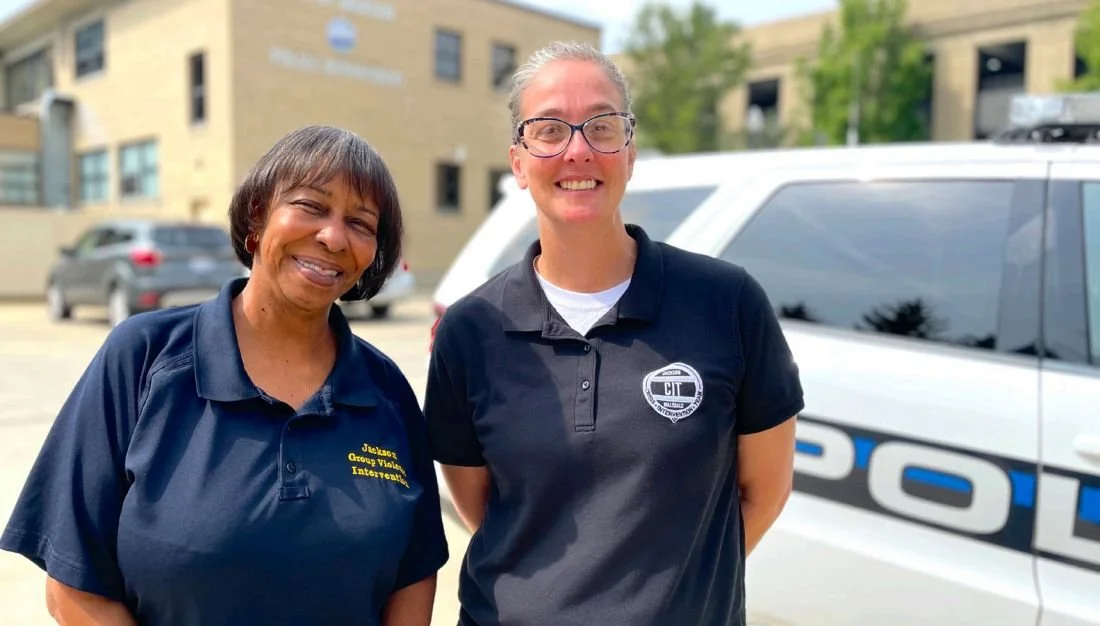
LifeWays Clinician, Nikki Winans with Group Violence Coordinator, Cheryl.
Jackson - When law enforcement officers respond to calls involving individuals in crisis, they often face challenges beyond their training. Without immediate access to mental health professionals, officers frequently encounter individuals with untreated mental illness, substance use disorders, or housing instability, leading to repeated calls for service without long-term solutions. Recognizing this gap, a partnership was formed between the Jackson Police Department and LifeWays to embed a LifeWays Clinician at the Jackson Police Department.
Before this partnership, officers had limited options—often resorting to emergency room visits, temporary detainment, or simply leaving individuals without the resources they needed. This cycle strained law enforcement resources and left vulnerable individuals without adequate support.
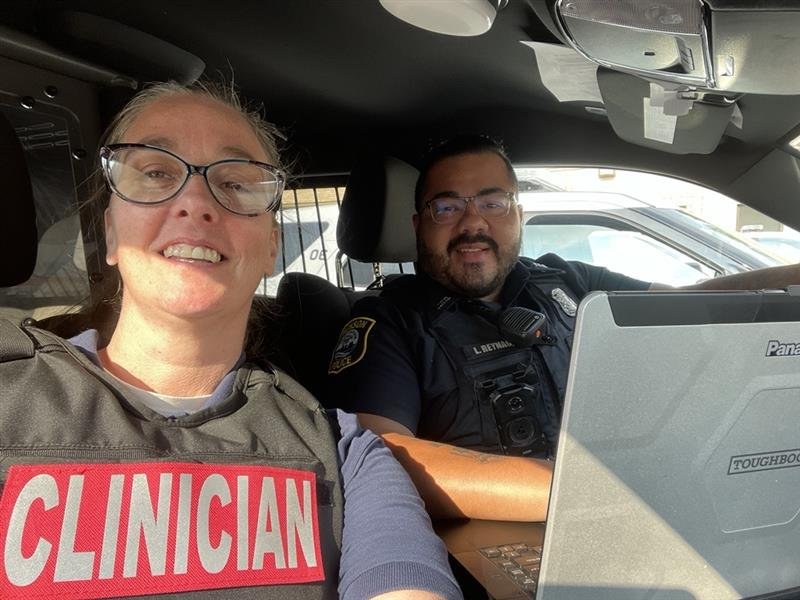
Nikki Winans, LifeWays Clinician and Officer Reynaga, JPD
A Collaborative Solution
The program has flourished since its implementation, with the embedding of LifeWays clinician Nikki Winans playing a key role in its success. Winans works closely with officers, responding to calls alongside them or following up with individuals in need. Her presence has strengthened the department’s approach to crisis intervention and created new opportunities for individuals to receive mental health support.
“Our repeat customers have gone way down,” says Lieutenant Peter Postma. “Before, officers would respond to the same individuals multiple times in a single day, often with no real solution in place. Now, with Nikki’s involvement, we’re seeing tangible results.”
Winans operates on a flexible schedule, working four 10-hour shifts per week to ensure she’s available during both day and night shifts. Recently, she adjusted her hours to provide better coverage for the evening teams, a move that has been well received by officers who were seeking additional support during later calls.
A Work Day for an Embedded Crisis Clinician
Each day, Winans works closely with officers to identify individuals who may benefit from intervention and ongoing mental health support. She begins her shift with a briefing from the sergeant on duty, reviewing any referrals from previous calls and planning for expected needs. From there, she is assigned to an officer to ride with for the day in a co-response capacity, actively engaging with individuals in crisis during emergency calls.
A typical day may involve responding to mental health crises, assisting individuals experiencing homelessness, or addressing substance use-related incidents. Unlike traditional ride-alongs, where civilians observe police operations, Winans is an active participant in crisis intervention. She provides on-site mental health assessments, de-escalates situations, and determines the most appropriate next steps, whether that means arranging transportation to a shelter, coordinating with a detox facility, or ensuring that medications are accessible for those who need them.
Between calls, Winans conducts follow-ups with individuals she has previously assisted, checking on their well-being and ensuring they are receiving the services they need. This might involve visiting someone at a shelter to confirm they’ve connected with a caseworker, coordinating with local mental health providers, or advocating for individuals who need specialized care.
“I don’t just respond in the moment—I follow through,” Winans explains. “If someone is struggling, I make sure they have the resources and support necessary to move forward, even after the immediate crisis has passed.”
One particularly impactful case involved an individual experiencing homelessness who was struggling with untreated mental illness and frequent encounters with law enforcement. Before Winans arrived, officers had responded to calls involving this individual multiple times a week, with little progress being made. However, after Winans was able to engage with him directly, she connected him with shelter services, coordinated his access to a psychiatrist, and ensured he received appropriate medication. Within weeks, his emergency calls dropped significantly, and he began actively participating in treatment.
Unlike officers, Winans is trained in mental health crisis intervention and has the ability to coordinate long-term care solutions. Whether it’s connecting individuals with peer support specialists, finding shelter for those in unstable housing situations, or ensuring proper medication management for those entering the jail system, Winans plays a crucial role in bridging the gap between law enforcement and mental health services.
Her work also extends beyond crisis response. She actively engages with community organizations, conducting outreach to educate staff on when to call 911 or when to seek help from LifeWays. This proactive approach has contributed to a noticeable decrease in emergency calls from places like the local library and shelters.
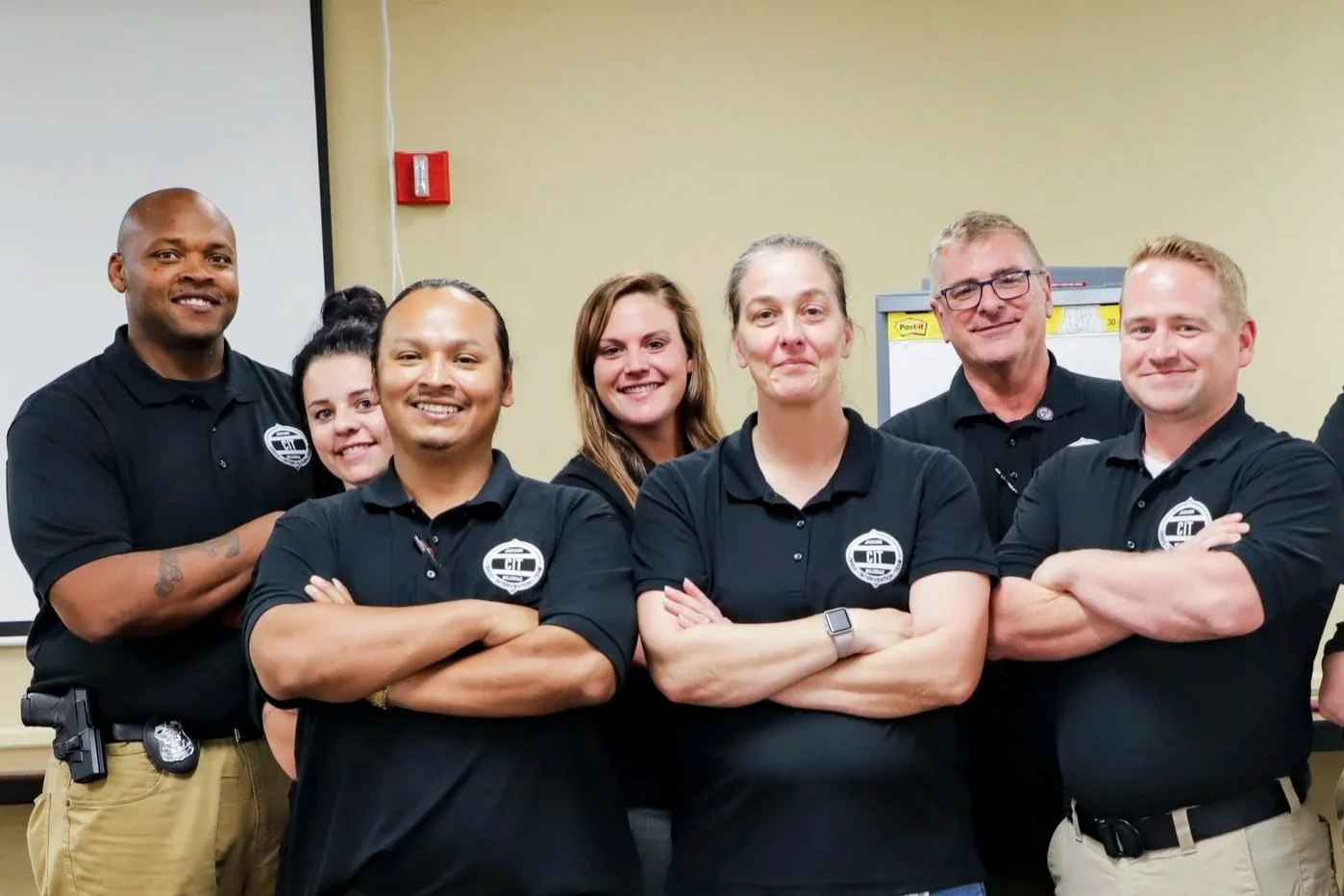
Nikki Winans with CIT graduates and LifeWays Clinician Fred Delos Santos
Referrals: A Critical Component of Crisis Intervention
A key part of the success of this partnership is the referral system, which helps ensure individuals in crisis receive the follow-up care they need. A referral occurs when an officer identifies someone who could benefit from mental health services, whether through direct interaction during a call or through past encounters where intervention was needed but not immediately available.
Referrals can happen in multiple ways. Sometimes, officers request Winan’s assistance on the scene, where she can conduct an immediate mental health assessment and determine the best course of action. Other times, if an individual’s crisis has stabilized but ongoing support is necessary, officers submit a referral form detailing the incident, the person’s needs, and any relevant background information. These forms are reviewed regularly, allowing Winan to follow up in the coming days or weeks.
The referral process is designed to ensure that no one falls through the cracks. It allows for structured follow-ups, ensuring individuals receive access to essential resources such as therapy, psychiatric care, substance use treatment, housing support, or medication management. The goal is to break the cycle of repeated police encounters and provide meaningful, long-term solutions.
“We’ve created a structured system to track referrals,” says Lieutenant Postma. “Each referral includes key details like the incident number, date, subject information, and the referring officer, along with the reason for the referral. This process allows us to monitor the program’s impact and ensure individuals receive the follow-up support they need.”
Since the program’s inception just eight months ago, there have been 89 referrals, showing steady engagement with the community. These numbers represent real people receiving essential mental health care, demonstrating the program’s impact on both law enforcement and public health.
Impact and Growth
The success of placing Winans at the department is not only reflected in reduced repeat calls but also in officer participation in Crisis Intervention Team (CIT) training, a mental health crisis response training for first responders. Since Winans began, interest in CIT training among officers has increased significantly. “We started with just a handful of CIT-trained officers,” Lieutenant Postma notes. “Now, as they see the value in what Nikki is doing, more officers are signing up for the 40-hour training. We just graduated an additional four officers, with more scheduled to attend soon.”
This partnership is a testament to the power of collaboration. By integrating mental health professionals into law enforcement response and providing CIT training to officers, the Jackson Police Department and LifeWays are creating a more effective, compassionate, and sustainable approach to crisis intervention. And for those who need it most, this partnership offers a real chance at stability and recovery—one intervention at a time.